Choosing a padel racket could be one of the biggest challenges for a padel player.
It’s easy to get confused with the different materials, shapes, brands, and weights.
After reading this article, you will no longer choose a racket based solely on a pretty design.
It is very important to find the right padel racket for your level and needs.
Playing with the right padel racket will not only improve your game and increase your enjoyment of the game, but it will also reduce the risk of hand injuries.
Before we get into the technical aspects, it is important to define the different levels of play and the main requirements:
Iesācējs
As the technique is still developing, an easy-to-play padel racket will be needed that is light, maneuverable, and provides enough control to hit the ball in the right place.
It is not necessary to buy a world-class player’s racket at first, as it could slow down your progress.
Vidēja līmeņa spēlētājs
Your playing style is not yet fully developed, so you may need a versatile padel racket that will help you adapt to different playing situations.
You should look for a racket that provides both power and accuracy.
Pieredzējis spēlētājs
The choice will depend on your playing style. You will definitely want a racket that offers maximum power and superior control, but there are other important features that you should pay more attention to.
Form
Apaļa forma (kontrole)
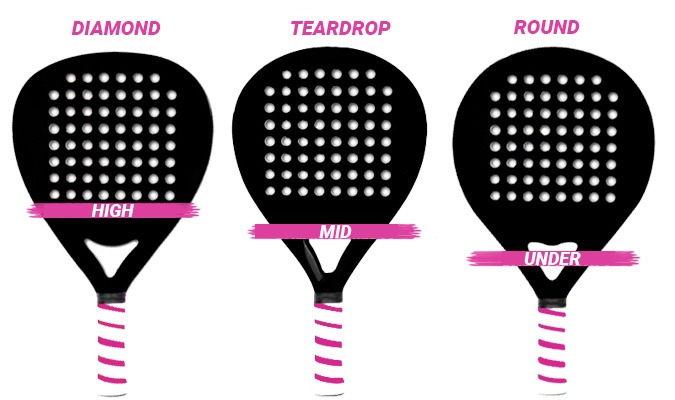
Round-shaped padel rackets are the easiest to use. They have a large “sweetspot” in the center of the racket (the “sweetspot” is the area where the ball responds best).
Round-shaped rackets provide excellent control, which is a big advantage for defensive padel players.
However, it is not true that round padel rackets are only for beginners. Stupa, Alex Ruiz and Lamperti – all world-class players – use round-shaped padel rackets.
Lāses forma (Balanss)
This is a combination of round and diamond shapes. Teardrop shaped padel rackets are versatile, balanced and offer the perfect combination of power and control.
The sweetspot is located slightly higher than round rackets, but larger than diamond-shaped rackets.
These padel rackets are suitable for players who do not yet have a specialized playing style (defense or attack).
Belastegin and Sanjo use teardrop-shaped rackets.
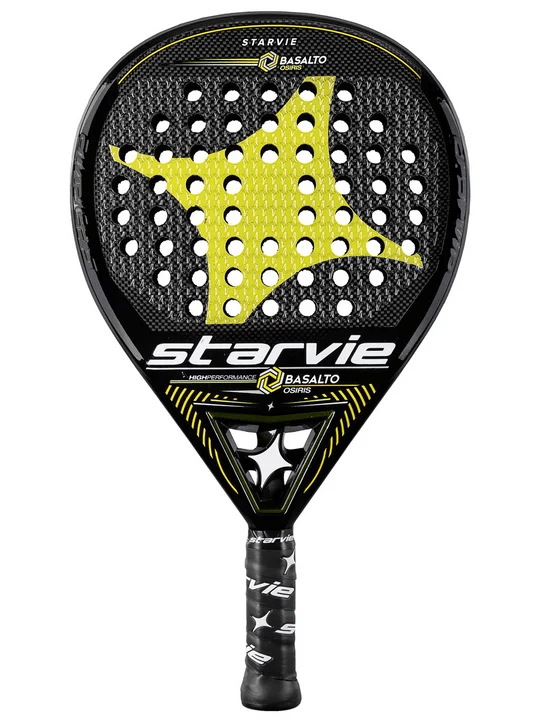
Dimanta forma (Spēks)
With a limited “sweetspot” area closer to the top, diamond-shaped padel rackets are the most powerful.
They are the favorite choice of many professional players, such as Juan LeBron, because they can skillfully hit the ball with any part of the racket.
But for beginners, the risk of error is quite high.
Diamond-shaped paddle rackets are ideal for attacking players, especially those who play on the left side.
Their disadvantage is that maneuvering is difficult, and for untrained players, this can cause hand fatigue.
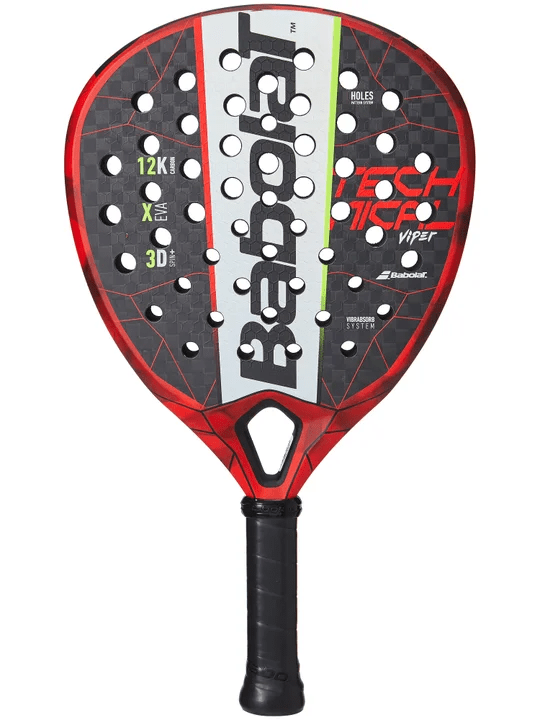
The weight is mainly located closer to the handle, which helps with quick reactions and control.Balanss
Pēc balansa padel raketes var iedalīt trīs kategorijās: Low balance (Light head weight – under 265 mm)
Round-shaped paddle rackets usually have a low balance, making them easy to control, maneuver, and comfortable to play.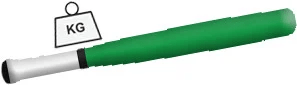
Vidējs balanss (Neitrāls balanss – ap 270 mm)
Lāses formas raketes parasti ir ar vidēju balansu.
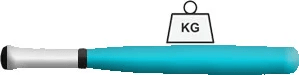
Augsts balanss (Smaga galva – virs 275 mm)
Such a racket provides maximum power, but is more difficult to maneuver.
The weight is concentrated at the top of the racket, which can pose a risk of elbow injuries.
Typically, this type of balance is characterized by diamond-shaped rackets.
Weight
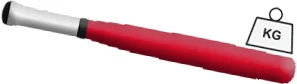
This is one of the most important factors when choosing a padel racket.
It should be noted that there is no “right” weight – it depends on your playing style and physical characteristics.
Most adult Paddle rackets weigh between 350g and 380g.
It should be known that more weight means more power, but less control.
The weight of rackets can be divided into two categories:
Zem 365 g
Such rackets are easier to control, better suited for fast volleys, but less powerful.
They provide great maneuverability and control.
Recommended for beginners to help learn proper technique, as well as players with hand injuries.
Virs 365 g
These rackets provide more power, but are more difficult to maneuver and less focused on control.
A heavy racket is more effective for attacking play, but requires excellent physical fitness.
Otherwise, you may experience pain in your elbow and wrist.
They are recommended for experienced and high-level players.
Women’s padel rackets typically weigh 330–360 g, while junior rackets are even lighter, around 330 g.
Material
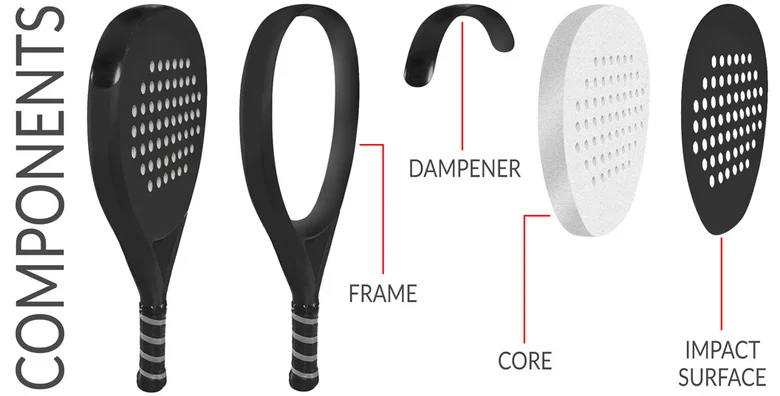
The materials used to make the surface and core of a racket determine what the racket is capable of.
Virsma
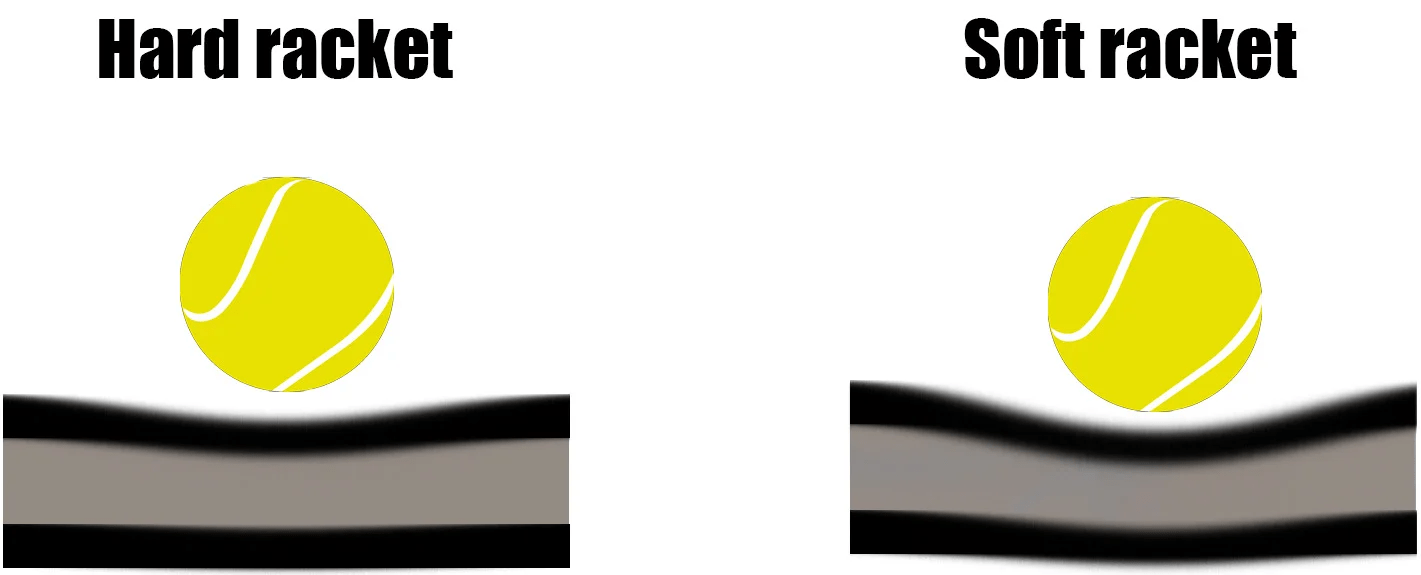
Padel rackets can vary in the hardness of their surface.
Here we evaluate the elasticity of materials when the ball contacts the racket surface, which affects the feel and touch during play.
This is not directly related to the power generated.
Racquet surfaces can be divided into two categories:
Mīkstās raketes
Usually made of fiberglass.
Such a racket absorbs most of the energy and reduces vibrations.
It provides good feel and touch for shots, offering a high level of comfort, which makes it a great choice for beginners.
Cietās raketes
These rackets are stiffer and less flexible.
They are usually made of carbon fiber, which means greater durability and longer lifespan.
This type of racket can produce more vibrations but offers more control.
They are recommended for experienced players with good technique.
Kodols
The core refers to the materials used to make the inner part of the racket.
There are two main materials:
Foam (Polietilēns)
Soft material known for its comfort.
It is used in padel rackets with soft fibers in the striking surface.
FOAM is very flexible, providing a soft feel on impact.
EVA (Etilēna-vinilacetāts)
This material quickly regains its original shape after impact.
It is lightweight and resistant to high temperatures.
EVA provides greater durability and less flexibility, which helps control shots more precisely.